


SoulLinker - Video Chat Online
4.8126.00 Reviews
App Specs
- Version
- 1.0.30
- Updated On
- License
- Free
- Downloads
- 500,000+
- Developer
- Echoo Team
- Categories
- Social
- Platform
- Android
Screenshots

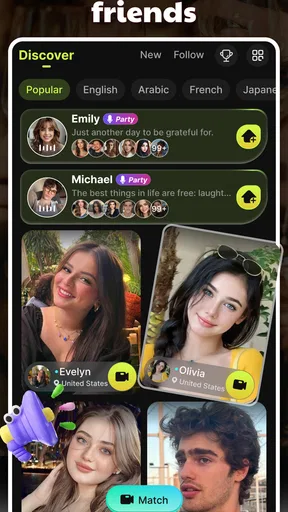
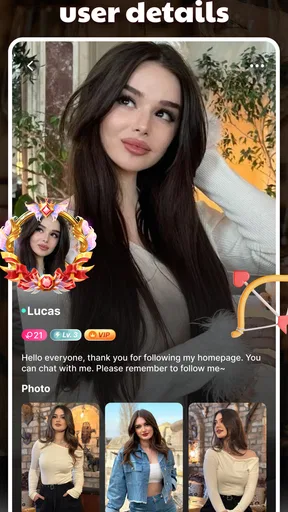
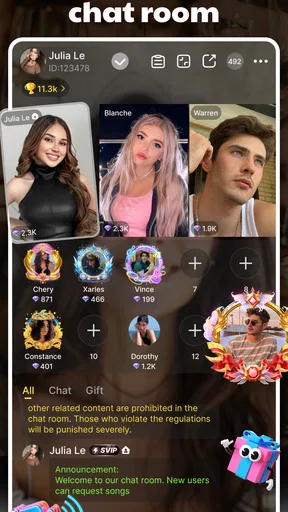
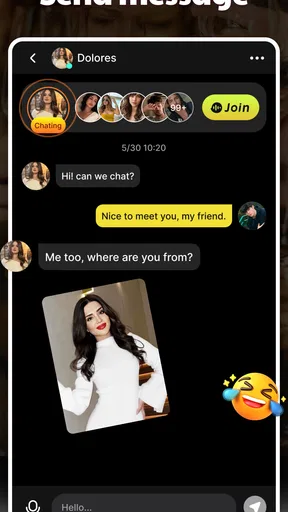
 Analysis by AppCompare
I approached SoulLinker as a social app for people who want conversation rather than another polished feed to scroll through. Its central idea is simple: private video chat with strangers, with the possibility of meeting someone outside your usual circle. That makes it more immediate than text-based social networks, but also more demanding. You are not just choosing a profile or leaving a comment; you are deciding, in real time, whether a conversation feels comfortable enough to continue.
After spending time with it, my view is fairly clear: this is most appealing when you want spontaneous human contact and are willing to set firm boundaries. It can be a refreshing alternative to endless swiping and passive browsing, but it is not the right fit for anyone who expects carefully filtered conversations, a quiet social experience, or the predictability of messaging people they already know.
How the experience feels in everyday use
The app comes from Echoo Team and sits in the social category. It is free to install, although in-app purchases range from $2.99 to $99.99 per item, so I would treat the free entry point as a chance to understand the experience rather than assuming every part of continued use will cost nothing. The current version is 1.0.30 and it supports devices running Android 6.0 or later.
The first thing that separates this format from ordinary social apps is the amount of attention it asks from me. With a conventional network, I can open a post, pause, mute a conversation, or answer later. A private video conversation has a different rhythm. My face, voice, surroundings, and reactions all become part of the interaction. That immediacy is the app’s strongest quality, but it is also the source of its main friction.
I found the concept especially useful during those small gaps in the day when I wanted a real exchange instead of more content. Imagine finishing work, having half an hour before dinner, and feeling tired of sending the same messages in a group chat. SoulLinker offers a way to turn that spare time into an actual conversation. The benefit is not that every encounter will be memorable; it is that the app gives social contact a chance to happen quickly.
That same scenario also shows why preparation matters. I would not open it in a noisy room, while walking near traffic, or when I was too distracted to pay attention. A video chat can feel unfair to the other person if I am clearly multitasking, and the experience becomes awkward when the setting is unsuitable. A quiet room, headphones, and a few minutes of uninterrupted time make a noticeable difference to how natural the exchange feels.
Why live video changes the social equation
Text chat gives both people time to compose themselves. Video removes much of that buffer. That can make conversations warmer because tone and facial expression are present, but it also means a poor match becomes obvious quickly. I could get a better sense of someone’s energy than I would from a short written introduction, yet I also had to accept that some chats would end almost immediately.
Worth Reading Before You Choose

Flipboard Shows What News Apps Must Do Beyond the Feed

Switching to Android Auto Means Rethinking Your Driving Routine

Google Calendar Makes a Crowded Week Easier to Manage

Ludo King Makes the Most of the Minutes Between Plans

Baby Panda World Brings Quick Play to Modern Phones, but Its Game Library Feels Busy

ESPN’s Live Game View Makes Following Close Games Easier
For me, the most interesting strength is the possibility of moving beyond the usual signals that dominate social platforms. A profile picture and a few lines of text can encourage snap judgments. A live conversation still involves judgment, of course, but it gives personality more room to appear. Someone who seems unremarkable in a profile can turn out to be thoughtful, funny, or simply easy to talk to.
There is a trade-off here that is easy to overlook: spontaneity is valuable only when I am comfortable with uncertainty. The app is better suited to curiosity than to a precise social mission. If I want to find a particular kind of professional contact, arrange a reliable study session, or maintain a long-running conversation with a known friend, a more focused service will usually serve me better.
Practical habits that improve the first conversation
I would start with a deliberately neutral background. This is not just about looking presentable; it keeps private details out of view and makes it easier to end a chat without revealing more of my routine than intended. I would also avoid displaying documents, screens, mail, family photographs, or anything that identifies where I live. In a stranger-to-stranger video setting, a tidy background is a useful privacy layer.
My second tip is to decide on an exit phrase before starting. When a conversation is pleasant, ending it is easy. When it is uncomfortable, searching for polite words can make me stay longer than I want. A simple statement such as “I’m going to stop here” is enough. I would not negotiate with someone who ignores that boundary.
A third useful habit is to judge the interaction by behavior rather than charm. A person who listens, accepts a short answer, and respects a pause is more promising than someone who immediately pushes for personal details. This is one of the hidden tests of the format: the app is not only helping me meet strangers; it is giving me a fast way to observe how they respond to boundaries.
I would also keep purchases separate from impulse. Because the app is free to start but includes paid items, I would explore the basic experience first and decide whether the additional spending actually improves the way I use it. The broad price range means a quick tap can represent very different levels of commitment, so I would review each purchase carefully rather than treating small prompts as harmless.
The strongest case for using it
The clearest argument in its favor is immediacy. SoulLinker does not ask me to build a public identity over weeks before social contact becomes possible. Its appeal is the moment of connection itself. That is valuable for people who enjoy meeting unfamiliar personalities, practicing casual conversation, or breaking out of a repetitive online routine.
It can also suit someone who finds text-based matching too slow or too ambiguous. Written messages often create an imagined version of the other person, and that version may not survive the first call. Video makes the decision more direct. I can usually tell sooner whether a conversation has energy, whether the other person is listening, and whether continuing feels worthwhile.
The app’s audience size suggests that this is not an obscure experiment. It has passed 500K+ installs, and its average rating is 4.8 from around 1.1K ratings. Those figures help explain why the concept has found an audience, but I would not read them as a promise that every encounter will be good. A social app can be well received overall while still producing uneven individual experiences, because the other participant is always part of the product.
The mature age rating of 17+ is important context rather than a minor label. I would not recommend treating this as a casual app for younger teenagers, and adults should still use judgment. An age category cannot replace personal caution, especially when contact begins with strangers and takes place through live video.
Where the experience becomes difficult
The biggest weakness is the lack of control that comes with meeting strangers. Even if the app makes it easy to begin a conversation, it cannot guarantee that the person on the other side will be interesting, respectful, or available for the kind of exchange I want. A sequence of weak matches can make the experience feel less like discovery and more like sorting through interruptions.
That unpredictability also affects accessibility and comfort. Some people are naturally good at spontaneous conversation; others need time to think or prefer written communication. If I feel self-conscious on camera, the app may create more pressure than connection. In that case, a messaging platform or a community with topic-based discussion would be a better starting point.
Privacy is another meaningful concern. A private video chat may feel intimate, but “private” should not be interpreted as “risk-free.” I would avoid sharing my full name, address, workplace details, school information, personal contact details, financial information, or other identifying facts during an early conversation. I would also leave immediately if someone asks for money, insists on moving elsewhere too quickly, pressures me to reveal something, or reacts badly to a reasonable refusal.
There is a practical weakness in the emotional cost of bad interactions. On a text service, I can ignore a message while I decide what to do. On video, discomfort arrives in real time. That means the app rewards users who are comfortable enforcing limits. If I tend to remain polite at my own expense, I would use it only in short sessions and stop as soon as the experience stops feeling healthy.
The financial model deserves similar caution. Free access lowers the barrier to trying the app, while purchases can introduce pressure to continue or enhance the experience. I would set a personal spending limit before using paid items and would never buy anything simply because a conversation was disappointing. Paying cannot turn an unsuitable stranger into a good match.
How it compares with familiar alternatives
Compared with a traditional social network, SoulLinker is more direct and less structured around public posting. I do not need to wait for a post to attract replies or maintain a visible feed to participate. The advantage is speed; the disadvantage is that there is less distance between curiosity and exposure.
Compared with text-first messaging apps, it provides richer immediate feedback but less control over timing. Messaging is better when I want to think carefully, communicate quietly, or keep a record of a conversation. SoulLinker is better when the point is to hear a voice, see a reaction, and decide quickly whether there is genuine rapport.
Compared with dating-oriented services, this app’s broad social premise may feel less transactional. I would not use it as a substitute for a service designed around a specific relationship goal. If I am seeking romance, I would prefer an app whose identity, discovery tools, and expectations are built for that purpose. If I simply want a spontaneous conversation, SoulLinker makes more sense.
Compared with topic-based communities, it offers less preparation before the interaction begins. A forum or group built around books, games, language learning, or technology gives me an immediate subject to discuss. Here, I may need to create that subject myself. My workaround would be to prepare a few safe, open questions about hobbies, films, travel, food, or everyday routines so the first minute does not depend entirely on improvisation.
Who will get the most from it
I would recommend SoulLinker to adults who enjoy low-stakes social discovery, can handle short or uneven conversations, and are comfortable appearing on camera. It is a good match for someone who wants to practice conversational confidence, meet people outside a familiar social circle, or replace passive scrolling with a more active experience.
It may also work for a person who has a busy schedule but still wants occasional human contact. A short session can be meaningful without requiring the long-term commitment of maintaining a profile, joining a group, or arranging a formal event. The key is to approach it as an optional social doorway, not as a guaranteed source of friendship.
I would tell shy users that they do not need to become highly outgoing before trying it, but they should begin with a clear limit. One brief conversation is enough for a first session. If the format feels uncomfortable, that is useful information, not a personal failure. A text community may provide a gentler route toward meeting people.
I would advise skipping it if privacy is a major concern, if unexpected video contact causes anxiety, or if the user wants dependable conversations with known people. Parents should also pay close attention to the 17+ age rating and not present the app as suitable for children. The mature label and stranger-chat format make supervision and age awareness especially important.
What I would check before settling in
Before using it regularly, I would confirm that my device is compatible with Android 6.0 or later, then make sure the camera and microphone work in the setting where I plan to chat. I would use headphones when possible, keep the camera angle limited to a safe area, and avoid using the app in public places where other people could be captured accidentally.
I would also establish a simple routine: short sessions, no rushed purchases, no personal contact details during an initial chat, and an immediate exit when a boundary is ignored. These steps do not remove the uncertainty of meeting strangers, but they make the uncertainty easier to manage.
The app was released on November 28, 2024, and its current version shows that the product is still a relatively young entry in this space. That makes it worth checking the experience after updates rather than assuming that every detail will remain unchanged. I would keep the app updated through the normal store process and reassess whether it still fits my habits over time.
My final recommendation
SoulLinker succeeds because it understands the appeal of an unplanned conversation. Its private video format can feel more human than scrolling through posts, and it offers a faster sense of personality than text alone. Echoo Team has built something that makes social discovery immediate, which is exactly why the app can be engaging when the match is good.
My recommendation comes with a firm condition: use it actively, cautiously, and in short sessions at first. The best experience comes from treating each chat as a brief possibility rather than an obligation. Keep identifying information private, do not let paid items decide how long you stay, and remember that ending a conversation is always acceptable.
For adults who want spontaneous contact and can handle uncertainty, I think it is worth trying because the free starting point makes experimentation straightforward. For users who prefer control, topic structure, or familiar contacts, another social option will probably feel more comfortable. The real strength of SoulLinker is not guaranteed friendship; it is the chance of an unexpectedly genuine conversation, provided you remain in control of the encounter.
Pros
- Quick video matching makes it easy to meet new people.
- Simple interface is suitable for first-time video chat users.
- Supports spontaneous conversations without lengthy profile setup.
- Useful for practicing communication with people from different backgrounds.
- Video interaction can feel more personal than text-based chat.
Cons
- Match quality can vary widely depending on who is online.
- Unexpected conversations may include inappropriate or offensive behavior.
- Requires a stable internet connection for smooth video calls.
- Privacy may be a concern when speaking with unknown users.
- Frequent matching can become repetitive without stronger discovery tools.
FAQs for SoulLinker - Video Chat Online
What is SoulLinker - Video Chat Online?
SoulLinker - Video Chat Online is a social communication app designed for meeting and talking with people through online video chats. Depending on the available features and your region, you may be able to discover other users, start conversations, exchange messages, and interact through live video. It is mainly intended for casual social connections rather than professional meetings or formal video conferencing.
Is SoulLinker - Video Chat Online free to use?
The app may be available to download for free, but some functions can require in-app purchases, credits, subscriptions, or other paid features. Before starting a video conversation, check the pricing information shown in the app and review any renewal terms carefully. Costs can vary according to your location, platform, promotional offers, and the specific features you choose to use.
Does SoulLinker require a camera and microphone?
Video chat features generally require access to your device’s camera and microphone, while text-based functions may work without them. During setup, SoulLinker may ask for permission to use these components, and you can manage access through your Android or iOS privacy settings. A stable internet connection, sufficient lighting, and headphones can also improve call quality.
Is SoulLinker safe for meeting new people online?
As with any social or video chat platform, users should take sensible precautions when communicating with strangers. Avoid sharing your home address, passwords, financial information, private documents, or intimate content. Use the app’s blocking and reporting tools if someone behaves suspiciously or violates the rules, and remember that profiles and conversations may not always represent a person accurately.
What should I check before downloading SoulLinker?
Before installing SoulLinker - Video Chat Online, check that your device meets the current Android or iOS requirements and that you have enough storage space. Read the app’s privacy policy, permissions, community guidelines, and subscription details. It is also worth reviewing recent store feedback, confirming the official developer listing, and making sure you are comfortable with the app’s approach to data and online interactions.


